Shingle to TPO Roof Conversion
Low-slope roof conversion from incorrect shingle system to gray TPO membrane on 2/12 pitch roof with corrected wall flashing details and strategic color selection.
The Challenge
This roofing project in Wayland, MA involved converting a low-slope roof from an incorrect shingle system to a properly installed TPO membrane roof. At first glance, the pitch of this roof can visually suggest that shingles might be acceptable, but in reality the slope was only 2/12, which made a flat-roof membrane system the correct long-term solution. This project had one of the most common but costly low-slope roofing mistakes: a roof pitch that can trick the eye into thinking shingles are appropriate when they are not. Although the roof looked steep enough at first glance, the actual pitch was only 2/12, which made it a poor candidate for a shingle system. On a roof this low, shingles are far more vulnerable to water intrusion and long-term performance issues. The correct solution was to replace the roof with a membrane system designed specifically for low-slope applications. We also had to account for the vertical wall transition. In order to flash the new TPO membrane correctly up the wall, one row of siding shingles had to be removed. During that process, we found that some of those shingles were partially rotted and needed replacement. Another important design consideration was membrane color. While white TPO is common, in this case it was not the best choice because the windows above the roof could have created excessive light reflection and discomfort for the homeowners, and potentially even affected the neighboring property. For that reason, a gray TPO membrane was the better solution.
Before & After Transformation
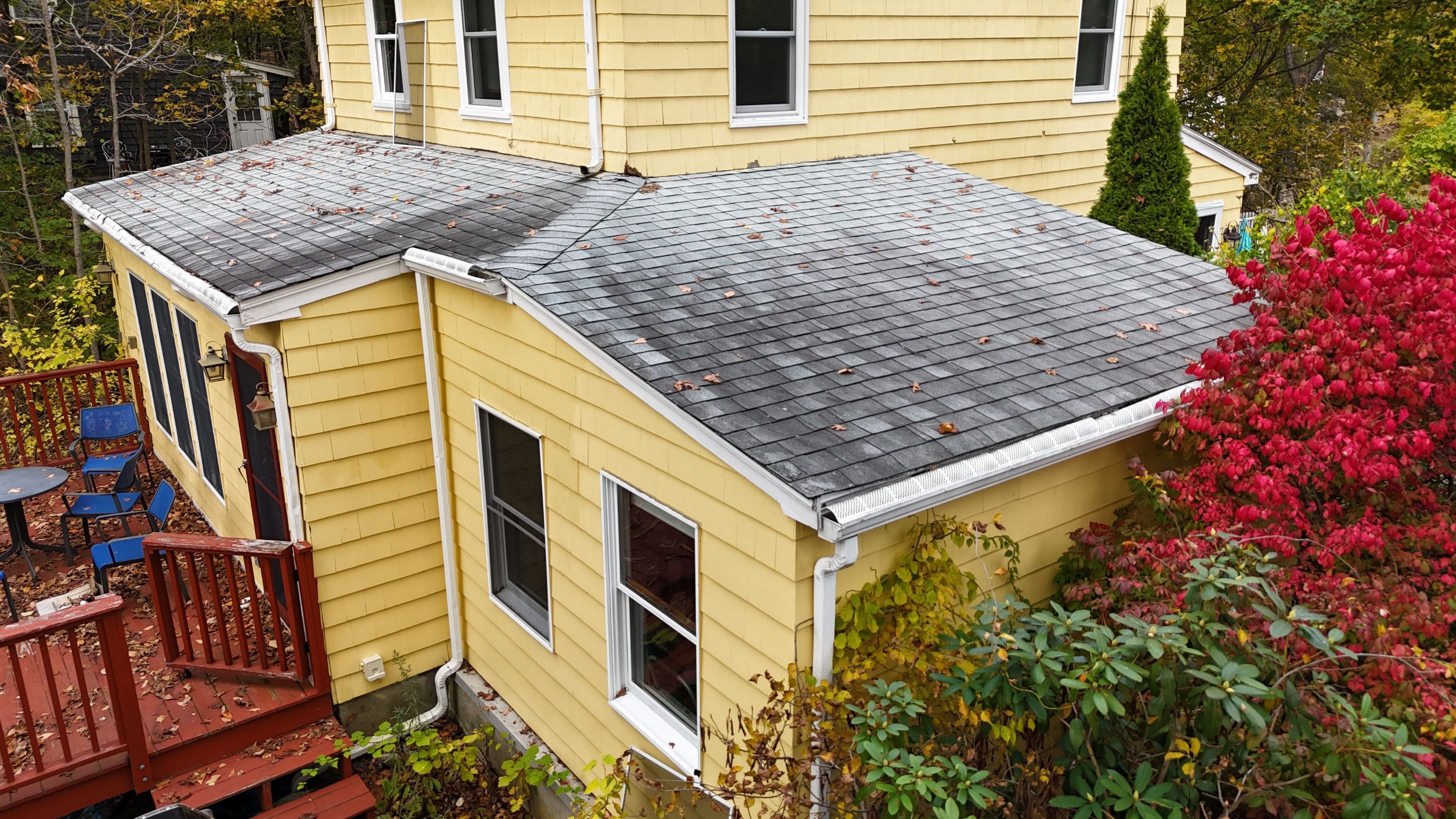
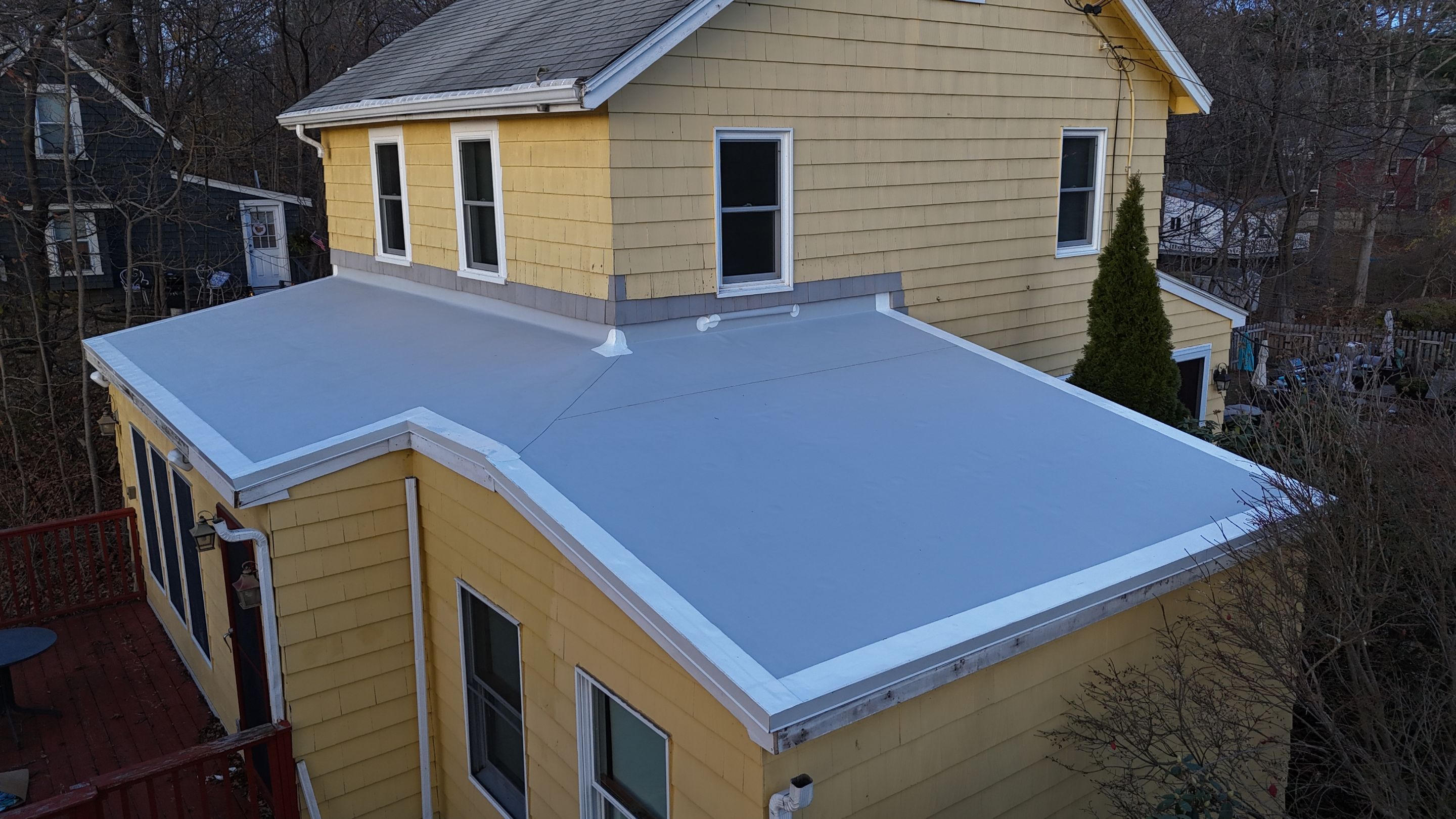
Transformation: This project showcases the dramatic difference our expert team can achieve. From the initial condition to the final result, see how quality craftsmanship transforms spaces.
Scope of Work
- Removal of the existing shingle roof
- Conversion from shingle roofing to a low-slope TPO membrane system
- Installation of new gray TPO roofing
- Removal of one row of siding shingles to allow proper membrane flashing up the wall
- Replacement of partially rotted siding shingles with new primed shingles
- Integration of the membrane flashing detail as required by the manufacturer
- Final detailing and cleanup
Materials Used
- Gray TPO membrane roofing (superior to EPDM rubber)
- New primed siding shingles for proper future finishing
- Manufacturer-approved flashing materials
- Professional-grade membrane fastening and sealing systems
- Low-slope roofing underlayment and accessories
Challenges Solved
- Corrected improper shingle installation on 2/12 pitch roof
- Converted to appropriate low-slope TPO membrane system
- Selected gray TPO to reduce excessive light reflection from upper windows
- Removed row of siding shingles for proper wall flashing integration
- Replaced partially rotted siding shingles discovered during removal
- Installed new primed shingles for proper future finishing (painting not possible due to cold temperatures)
- Created manufacturer-compliant wall flashing detail
- Balanced long-term roofing performance with homeowner comfort and aesthetics
The Results
The completed project corrected a roof system that had been finished with the wrong material for its actual pitch. By converting the roof from shingles to a properly installed TPO membrane system, we created a much more reliable and watertight low-slope roof assembly. The use of gray TPO also improved the comfort and visual practicality of the finished roof by reducing excessive reflection near the upper windows. Combined with the corrected wall flashing detail and replacement of the damaged siding shingles, the result is a smarter, more durable, and more thoughtfully executed roofing system. This project is a strong example of going beyond a standard replacement by choosing the right system for the actual roof conditions and by thinking through performance, appearance, and homeowner comfort at the same time.
Project Timeline
Shingle to TPO Roof Conversion
This project was completed efficiently by focusing on the critical roofing and flashing corrections needed to convert the assembly into a proper low-slope roof system
Investment Insights
Frequently Asked Questions
What is the minimum roof pitch for shingles?
While manufacturers often specify a 2/12 pitch as the absolute minimum for shingle installation under specific conditions, in practice, shingle systems on 2/12 pitch roofs are far more vulnerable to water intrusion and performance issues. For long-term reliability on low-slope roofs, membrane systems like TPO are the better choice. A professional roof assessment can determine if your roof pitch is appropriate for shingles or if a membrane system would provide more reliable protection.
Why is TPO better than shingles for low-slope roofs?
TPO membrane systems are specifically designed for low-slope applications and provide continuous watertight protection across the entire roof surface. Unlike shingles, which rely on overlapping pieces and gravity for water shedding, TPO creates a monolithic sealed membrane that is far less vulnerable to water intrusion on low-pitch roofs. TPO also offers superior seam performance, durability, and long-term reliability on slopes where shingles are marginal.
What is the difference between gray TPO and white TPO?
White TPO is the most common color because it reflects sunlight and can help reduce cooling costs in certain applications. However, gray TPO is sometimes the better choice when excessive light reflection could create discomfort for homeowners or neighbors, particularly when the roof is visible from upper windows or adjacent properties. Gray TPO provides the same membrane performance and durability as white TPO while reducing glare and reflection concerns.
Is TPO better than EPDM rubber roofing?
TPO offers several advantages over EPDM rubber roofing, including heat-welded seams that create stronger bonds than EPDM's tape or glued seams, a cleaner finished appearance, better resistance to ponding water, and improved long-term seam performance. While EPDM is still used by many contractors, TPO is generally considered a superior low-slope roofing option for residential and commercial applications.
Why did you remove a row of siding shingles?
To properly flash the TPO membrane up the wall as required by the manufacturer, we needed to remove one row of siding shingles. This allowed the membrane to extend up the wall behind the siding and create a watertight transition between the roof and the vertical wall surface. Proper flashing integration is critical for preventing water intrusion at wall-to-roof transitions and ensures the membrane system performs as designed.
What are primed shingles?
Primed shingles are wood shingles that have been factory-coated with a primer to prepare them for painting. In this project, the replacement siding shingles we installed were primed rather than painted because outdoor temperatures during the roof replacement were too cold for proper paint application. The primed shingles can be painted during warmer weather to match the existing siding finish.
How long does TPO roofing last?
Quality TPO roofing systems typically last 20-30 years when properly installed and maintained. TPO's heat-welded seams, UV resistance, and membrane durability make it an excellent long-term investment for low-slope roofing applications. Regular inspections and minor maintenance can help extend the life of TPO systems even further.
How much does a shingle to TPO roof conversion cost in Wayland, MA?
Costs vary based on roof size, complexity of flashing details, extent of siding or trim work needed, accessibility, and specific project requirements. Converting from an incorrect shingle system to a proper TPO membrane system requires careful planning and skilled installation to ensure long-term performance. Contact WaterTite Co. for a detailed assessment and accurate quote for your specific low-slope roof conversion needs.
Related Links
Similar Projects
TPO Flat Roof Installation
This roofing project in Newton, MA involved replacing a failed rubber roof with a new TPO flat roof system after the original roof blew off and a second contractor attempted a major change order after only placing a tarp. We reviewed the situation, provided a fair proposal, ordered materials immediately after deposit, and completed the full installation in one day — just five days after the client signed.
Roll Roofing to TPO Conversion
This roofing project in Danvers, MA involved replacing an incorrectly installed roll roofing system with a new white TPO membrane roof designed for better long-term performance. We removed the failed roofing, installed the new TPO membrane, and removed and replaced the adjacent siding so the membrane could be flashed correctly up the wall in accordance with manufacturer requirements. The full project was completed in one day.
Rubber Roof to TPO Replacement
This roofing project in Framingham, MA involved the emergency replacement of an incorrectly installed EPDM rubber roof with a new TPO roof system. The previous installation by another contractor had failed, leaving the homeowner — who had trusted us with a prior shingle roof replacement — in need of a fast, reliable solution. We advised TPO as the stronger long-term option, and once the proposal was approved and the deposit received, we scheduled and completed the full replacement in one day.
Ready for Your Own Transformation?
Contact Watertite Company today for a free consultation and estimate for your flat roof project in Wayland.